When the Shutters Stay Down: Keeping Pledges Safe Through Business Disruption in 2026

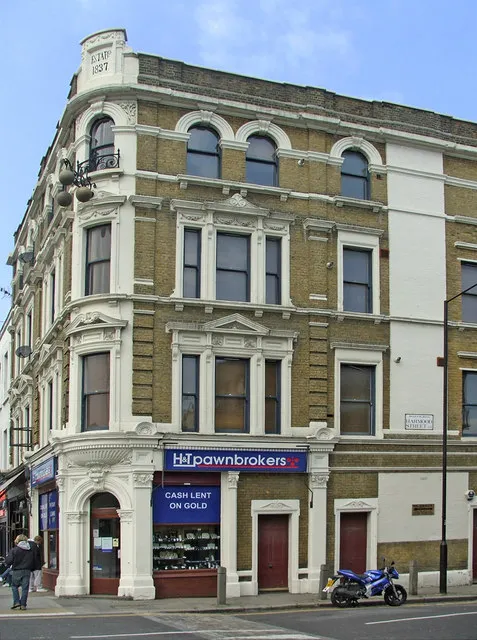
Photo: Gerald England , CC BY-SA 2.0, via Wikimedia Commons
A pawnbroking business holds two things for its customers: money advanced, and property in custody. The first is a financial relationship that can survive a closed door. The second cannot. An item locked inside a flooded basement or an unpowered vault is not an inconvenience — it is a consumer-protection event, and the way a firm responds in the first seventy-two hours will shape its regulatory standing and its reputation for years.
Continuity planning is often treated as a document produced for the insurer and then filed. The firms that handle disruption well treat it as a set of rehearsed habits.
The scenarios worth planning for
Not every risk deserves equal preparation. For most branches, the credible disruption list is short and unglamorous:
- Loss of premises access through flooding, fire, structural damage, or the sudden closure of a building by a landlord.
- Utility failure — a power cut that disables alarms, CCTV or access control, or a loss of heating that makes a premises unusable in winter.
- Cyber incidents — ransomware encrypting the pledge book, or a breach exposing customer identification documents.
- Staff unavailability — illness, a vacancy in a two-person branch, or the sudden departure of the only keyholder.
- Loss of a key supplier, such as a secure logistics or IT provider, or an upstream failure in a shared services group.
Each produces the same underlying question: how do we get customers their property, or a clear answer about it, when the normal route is unavailable?
Custody first
Pledged goods must remain secure, identifiable and insured throughout the disruption. Practical measures include:
- A custody register held separately from the branch. The pledge book should be recoverable from a second location, ideally with an encrypted off-site or cloud backup updated at least daily. A book that exists only on a server in the affected building is not a backup.
- Photographic and descriptive records for each item, so that identity can be confirmed even if physical labels are lost.
- Dual keyholding, with at least two named individuals able to access the vault and a documented process for when neither is available.
- A pre-agreed relocation option. Identify in advance a secondary secure location — a sister branch, a logistics partner, a bank vault — and confirm in writing that it will accept pledges at short notice.
- A salvage protocol. If water, smoke or structural damage has reached stored items, do not handle them casually. Record condition photographically before any movement and notify affected customers as soon as their identities are known.
Reaching customers when the door is locked
Consumers whose items are inside a closed shop will not wait patiently for a press release. Communication should be planned, not improvised:
- A notice on the door and on the website, updated daily, giving a named contact and a working telephone number.
- A recorded message on the branch line, updated at the same time as the door notice.
- Direct contact with customers whose redemption dates fall during the closure. These are the most urgent calls, because a missed redemption date carries real consequences.
- A clear statement of what customers should not do — for example, do not send identification documents by ordinary post or by unsecured email.
Where the disruption is likely to be prolonged, firms should consider extending redemption periods voluntarily and recording that decision. Goodwill here is cheap compared with the alternative.
Records that survive the event
Continuity and data protection intersect. Losing access to customer records is a data protection incident as well as an operational one, and unauthorised access is a reportable breach where it presents a risk to individuals. Practical checks:
- Confirm that backups are encrypted, tested by restoring a sample, and stored off-site.
- Keep contact details for the Information Commissioner's Office and your regulator in the continuity folder, not only in a system that is inaccessible.
- Maintain a paper fallback for the first forty-eight hours: a printed list of open pledges with customer contact numbers, held securely off-site and refreshed weekly.
- Have a script ready for customer enquiries about whether their data has been affected, and be prepared to explain what has been done.
Insurance: read the small print before the flood
Many pawnbrokers assume their policy covers what it does not. Confirm in writing:
- whether goods held in custody for customers are insured, and on what basis — market value, replacement value or agreed valuation;
- whether business interruption cover includes the additional costs of relocating to temporary premises;
- whether cyber incidents, including ransomware and data restoration costs, sit within the policy or require separate cover;
- what notification obligations and timescales apply after an incident.
An annual fifteen-minute conversation with a broker is more valuable than a ninety-page policy read in a crisis.
Notifying the regulator and others
Firms should notify their regulator promptly of anything that materially affects their ability to operate or to treat customers fairly, and should keep a contemporaneous log of decisions taken, timings and customer communications. Where personal data has been compromised, the seventy-two-hour reporting expectation to the Information Commissioner's Office applies. Where theft or fraud is suspected, report to the police and to Action Fraud. Where the incident is cyber in nature, the National Cyber Security Centre offers practical guidance and a route to report.
Association members should also inform us. We can circulate information to the local trading standards service, signpost customers to the right contact, and share lessons across the membership without identifying the firm.
Drills, not documents
A continuity plan that has never been tested is a hypothesis. Once a year, run a simple exercise: name a disruption, close the branch on paper, and walk through who does what in the first hour, the first day and the first week. Confirm the backup restores, the keyholder is reachable and the door notice is drafted. Update the plan with what the exercise reveals — it always reveals something.
Resilience is not an insurance product or a filing cabinet obligation. It is the practical expression of a simple promise made at the counter: your property is safe with us, and you will always be able to reach us.