Fair Claims, Clear Windows: Financial Promotion Discipline for Pawnbrokers in 2026
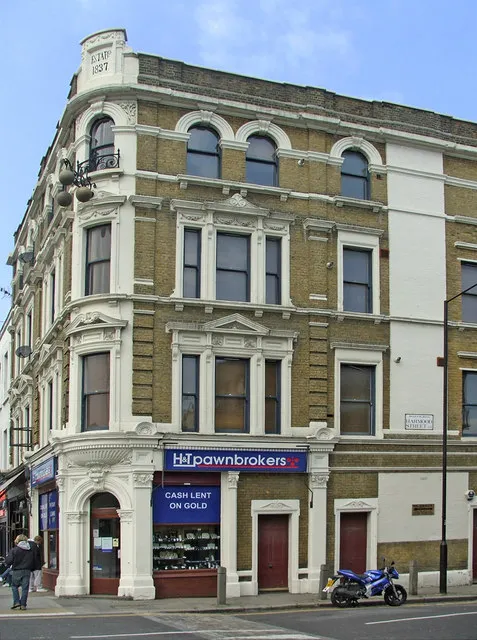
Photo: Christine Matthews, CC BY-SA 2.0, via Wikimedia Commons
Pawnbroking is a visible trade. The window on the high street, the sandwich board on the pavement and the sponsored post on a local Facebook group all perform the same function: they invite a consumer to borrow money. Under the financial promotion rules, that function brings obligations. The purpose of this briefing is not to dampen marketing ambition but to make clear that a well-run promotion is part of treating customers fairly, not an administrative afterthought.
Where the rules bite
Any communication which invites or induces a customer to enter into a regulated credit agreement is a financial promotion. That covers far more than a printed leaflet. It includes window vinyls, A-boards, local radio spots, newspaper advertisements, email campaigns, paid search, influencer collaborations, in-store screens and organic social media posts from a business account. The medium changes the format; it does not change the standard.
The governing requirement is straightforward and demanding: communications must be fair, clear and not misleading. Under the Consumer Duty, firms must also support consumer understanding and avoid foreseeable harm — which means a promotion that is technically accurate but likely to be misread is a compliance problem, not a creative success.
The four claims that cause the most difficulty
'Best rates in town.' A comparative claim must be capable of substantiation, must compare like with like, and must be kept current. If the firm down the road changes its tariff, a claim that was true in March may be false by June. Where a claim cannot be evidenced, it should not be made.
'Instant cash.' Speed claims are only permissible where the process genuinely delivers them in the ordinary course. A same-day service subject to valuation, identification and affordability assessment should be described as such. The consumer who arrives expecting cash in five minutes and leaves forty minutes later having been asked for documents has been misled, even if no individual staff member misled them.
'No credit checks.' Pawnbroking is secured lending and affordability considerations still apply. Blanket statements of this kind invite consumers to believe that no assessment of their circumstances will take place, which is rarely accurate and undermines confidence when the assessment does occur.
Urgency and pressure. Countdown language, 'last chance' framing and scarcity cues are increasingly used in digital campaigns. In a credit context they risk being construed as pressure selling, and they sit awkwardly with the fair treatment of potentially vulnerable customers.
The small print is not a correction mechanism
A frequent failing is the promotion whose headline is qualified into something quite different by the terms beneath. If a customer must reach paragraph seven to learn that the advertised rate applies only to loans above a certain value, the promotion is unbalanced. Risk warnings, representative examples and cost information should be given prominence commensurate with the benefit being promoted.
Where a representative example is used, check that the figures reflect a realistic borrowing pattern for the branch rather than a best-case scenario. Where a rate is described as 'from', the qualifying conditions should be visible without scrolling.
Social media: informal channel, formal obligations
Social media is where most breaches now originate, for two reasons. First, posts are produced quickly by staff who may not recognise themselves as making a financial promotion. Second, the format encourages compression — a short caption, a striking image, a comment thread — which is precisely the environment in which balance is lost.
Practical controls for member firms include: a named individual accountable for every account that posts on behalf of the business; a single approval step before publication, applied without exception including to stories and replies; the disabling of comments where moderation cannot be resourced; and a rule that no staff member promotes the firm's credit products from a personal account.
A workable approval and record-keeping routine
- Log every asset. Maintain a register of promotions by date, channel and medium — window, print, digital, in-store.
- Apply a single checklist before publication: is it accurate, is it balanced, is it clear, can every claim be evidenced, is the representative example realistic, does it avoid pressure?
- Record the approval. Note who signed it off and on what evidence, including any competitor price comparison relied upon.
- Set a review date. Time-limited promotions should be withdrawn on time; open-ended claims should be re-verified at least quarterly.
- Retain copies. Keep the published version, including screenshots of digital posts, for the period required by your records policy.
- Feed back into training. Where a post is amended or withdrawn, tell the team why. The lesson is worth more than the correction.
When a promotion goes wrong
If an inaccurate promotion has been published, the response should be prompt and documented: withdraw or amend the material, consider whether affected customers need to be contacted, assess whether any consumer has suffered detriment, and record the root cause. Firms should consider whether the matter is notifiable to the regulator and should ensure the complaint log reflects any resulting contacts.
The reputational dividend
Clear promotions do commercial work as well as compliance work. A customer who understands the cost before entering the branch arrives with realistic expectations, completes the transaction faster, and is markedly less likely to complain afterwards. Promotion is the first conversation a firm has with a customer. Making that first conversation honest is the simplest available form of consumer protection.