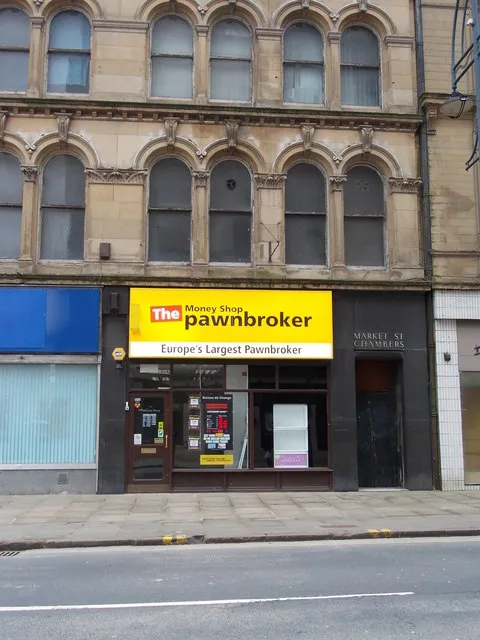
The Counter Under the Microscope: Building Trust Through Mystery Shopping
Photo: mystery shopper evaluating customer service at pawnbroker counter UK, via images.stockcake.com
Consumer confidence in pawnbroking is built at the counter. A firm can have a well-drafted pledge ticket, a compliant website and a sensible complaints policy, but the customer's experience rises or falls on how a member of staff explains a valuation, a fee or a redemption date. An internal mystery-shop exercise is one of the simplest ways to test that reality. For NPA members in 2026, it can be a proportionate tool for training, supervision and evidence of fair treatment.
Why shop your own counter?
Mystery shopping is not about catching people out. It is a structured way to see the customer journey as the customer sees it. It can reveal whether scripts are understood, whether key terms are explained consistently and whether staff invite questions. It can also show where systems or ticket wording create confusion. That makes it useful management information, not just a training gimmick.
Regulators expect firms to monitor customer outcomes and to identify and remedy harm. A well-run mystery shop can support that work by providing evidence of how information is communicated in practice. It is not a substitute for file reviews, complaints analysis or formal compliance monitoring, but it adds a frontline perspective that those tools can miss.
Design the exercise before you start
Begin with a clear purpose. Are you testing new-pledge explanations, redemption calls, extensions, lost-ticket queries or complaints handling? Choose two or three scenarios that reflect real customer journeys. Write a short brief for the shopper, including what they should ask, what they should not do and how they should record the interaction.
Decide whether the exercise will be announced or unannounced. If it is unannounced, involve HR and follow your own policies on monitoring and data protection. Use a trained colleague from another branch or an external provider. Avoid entrapment or unrealistic scenarios. The aim is a fair test of normal service, not a test of endurance.
What to measure
A simple scorecard works best. Rate each area from one to five and leave space for specific comments. Useful categories include:
- Welcome and needs: did staff establish what the customer wanted and check that the transaction was suitable?
- Valuation: was the basis explained, including condition, testing and the difference between valuation and loan offer?
- Cost: were interest, charges and total amount payable explained with a cash example?
- Redemption: was the date, extension option and consequence of missing it made clear?
- Default: was the sale process explained, including notice and any surplus?
- Complaints: was the complaints route and ombudsman signposting explained where relevant?
- Documentation: was a copy offered, key terms highlighted and time given to read?
- Understanding: did staff check that the customer had understood and invite questions?
Add a short narrative section. A score without context is hard to act on. Record what was said, not just whether it was said.
Give feedback that changes behaviour
Debrief quickly, ideally within a few days. Start with what went well. Then use specific examples: for instance, the interest rate was explained but the total payable was not. Ask the member of staff what they would do differently. Separate individual coaching from systemic issues. If several shops show the same gap, the problem may be the script, the ticket layout or the training, not the person.
Avoid public shaming or using a single shop as the sole basis for disciplinary action. Use the results to support supervision and development. Repeat the exercise after an appropriate interval, such as three to six months, to see whether actions have made a difference.
Turn results into assurance
Aggregate the scores and comments. Identify common gaps and track actions to completion. Report the findings to senior management and compliance, and link them to training records and complaints trends. Keep records of the methodology, scenarios and follow-up. That package can be useful evidence in a supervisory conversation because it shows a firm is actively testing its own conduct and responding to what it finds.
Be careful not to overclaim. A mystery shop is a sample, not a guarantee of compliance. It should sit alongside other monitoring. It is also important to update scenarios when rules, products or ticket wording change.
A six-step routine for 2026
- Define the customer journey you want to test.
- Write realistic scenarios and a scoring guide.
- Brief the shopper and record consent or notifications where required.
- Run the shop and capture specific examples.
- Debrief constructively and agree actions.
- Report, track and repeat.
NPA members can use this routine as part of their compliance toolkit. The discipline is simple: test what customers actually hear, fix what is unclear, and keep a record of the improvement. That is good for consumers and good for the firm.